
Handwriting
 At Bewdley Primary School, we believe that handwriting is an essential foundation for successful writing. We want every child to develop handwriting that is comfortable, legible, fluent and increasingly automatic, enabling them to concentrate on expressing their ideas rather than the physical demands of forming letters.
We teach handwriting through Kinetic Letters, a structured programme that develops both the physical and cognitive skills needed to write effectively. The programme recognises that handwriting is a movement-based skill and that children need secure physical foundations, effective pencil control and well-established letter formation before they can develop speed and fluency.
The Four Threads of Kinetic Letters
1. Making Bodies Stronger
Successful handwriting begins with physical readiness. Children develop the strength and stability needed for writing through activities that support posture, balance, core strength, shoulder stability and fine-motor control.
The programme uses memorable animal positions, including Meerkat, Gorilla, Penguin, Lizard and Stone Lion, to help children develop the physical foundations for comfortable writing.
2. Holding the Pencil
Children are taught how to hold their pencil comfortably and efficiently using the Three Friends Hold. They learn how to position their bodies, paper and writing equipment to support control, accuracy and stamina.
We recognise that children develop at different rates and provide additional practice and support where needed.
3. Learning the Letters
Kinetic Letters teaches children to form letters through movement rather than simply copying their shapes.
Letters are organised into families according to the movements needed to form them. Children learn through large movements, practical activities, verbal instructions and increasingly precise writing.
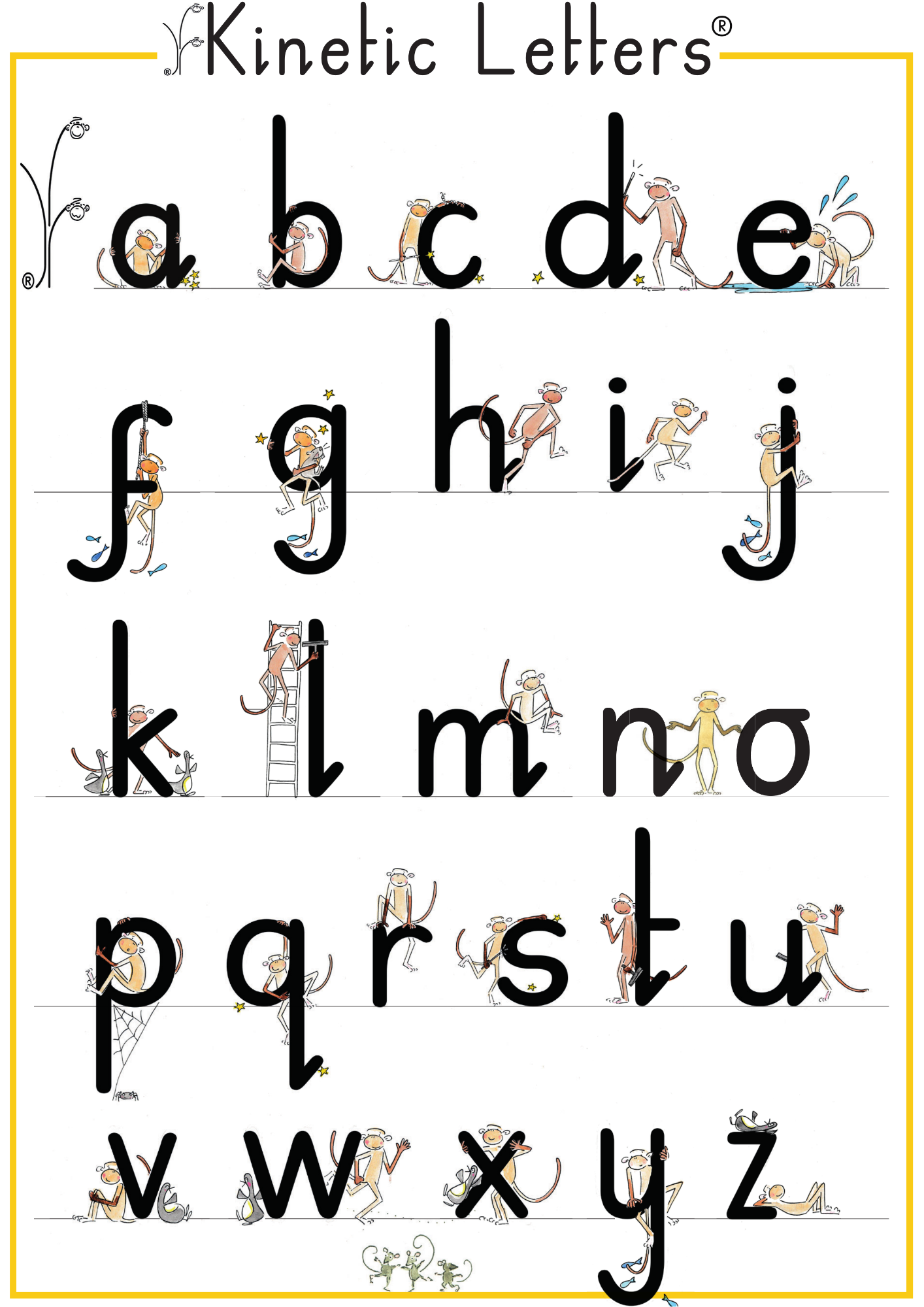
Our Kinetic Letters Alphabet
Bounce and Skip help children remember the starting points and movements used to form letters. The alphabet image below shows how these characters support correct letter formation.
4. Flow and Fluency
As children become confident with letter formation, they develop greater control, speed and stamina. They learn to write fluently, including developing appropriate letter joins when ready.
The ultimate aim is for handwriting to become automatic, allowing children to focus their attention on vocabulary, sentence construction, composition and the quality of their writing.
Handwriting Across the School
Handwriting development begins in our Early Years provision through physical development, purposeful mark-making, fine-motor activities and early letter formation.
As children move through Key Stage 1 and Key Stage 2, they continue to practise and refine their handwriting, developing accuracy, consistency, fluency and stamina.
We recognise that secure handwriting is important at every stage of education. Where children need additional support, teachers revisit the necessary foundations and provide targeted practice.
Supporting Handwriting at Home
We use Kinetic Letters throughout Bewdley Primary School to help children develop comfortable, accurate and fluent handwriting.
To support consistency between home and school, we have provided a selection of Kinetic Letters resources for parents and carers. These explain the physical foundations of handwriting, how children learn to hold a pencil, the different letter families and the movements used to form letters.
The resources also provide practical activities that families can use at home to help children build strength, develop confidence and practise their handwriting.
Please encourage your child to use the letter formation movements and language they have been taught in school. Accurate formation and control are more important than speed, particularly when children are learning new letters.
As children become more confident, the emphasis gradually shifts towards fluency, stamina and increasingly automatic handwriting.
Explore the resources below to find out how you can support your child's handwriting at home.